Shop
Prosthetics

Introduction
This information is provided to give you a brief overview to the issues related to prosthetic components and their design.
Your clinician will discuss the advantages and disadvantages of each and decide with you which is the most suitable for your needs and abilities.
Upper Limb
The movement and function of the arm and hand are very complex and extremely difficult to replicate with prosthetic components.
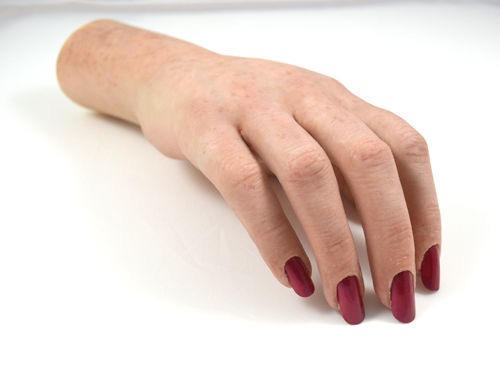
Elbow, wrist and finger joints can be moved into bent or straight positions manually, by body harnesses or by using external power that is activated by using electrical signals from muscles. In some cases this can be a combination of these systems. Once in position, objects can be gripped or stabilised so that tasks can be carried out.
Lower Limb
Sockets
Every socket is made individually to fit a person. Measurements and possibly a cast will be taken of the residual limb, also known as 'stump'. Sockets can be made of different materials and need to be strong enough to withstand the forces created during waking on the prosthesis. They must also protect the skin, bone and tissues encased within.
The prosthetist will endeavour to ensure that the pressure through the socket is applied to skin areas that can tolerate pressure and that sensitive areas are off-loaded. It will still take time for the skin and other tissue such as muscle and bone, to build up the tolerance to weight bear through the socket. For upper limb prostheses, the skin needs to be able to tolerate the suspended weight of the limb.
If the socket fits snugly, it will be comfortable and you will be able to use your muscles more effectively. This will enable you to control the prosthesis better.

Knees
There are different knee types that are appropriate for different individuals
- A simple locked knee -this locks straight when walking and is unlocked by hand to sit down, or
- Free knees - these will bend when you swing them.
They do not have a lock as such but will remain stable when the body weight is applied when you stand on it. No free knee is completely safe but by making sure that it is correctly aligned and that you know how it works, risks of falling can be minimised.
Stairs, Slopes and sitting -some knees can bend when you stand on them to lower you down a slope, stair or into a sitting position. In general terms, the more functional features that a knee joint has the heavier it is.

Feet
There is a huge range of different foot and ankle systems. Some are best for indoor walking and some for outdoor. Some will suite short distances and others are for greater distances and sport. Feet with a better response to weight loading, those with a 'bit of spring' can help you use your muscles better. Like the knees, a higher degree of function often comes with an increased weight of the unit. In both cases the quality of the socket suspension becomes very important.
Very few feet are adjustable for different heel heights of shoe. You should stick to shoes of similar heel heights, keeping to a similar difference between heel and sole. Your prosthetist will advise you of how to adapt footwear to suit your prosthesis.
Buy shoes to fit your OWN foot and not for the prosthesis. The prosthetic foot can be fitted/changed to suit.

Silicone cosmetics
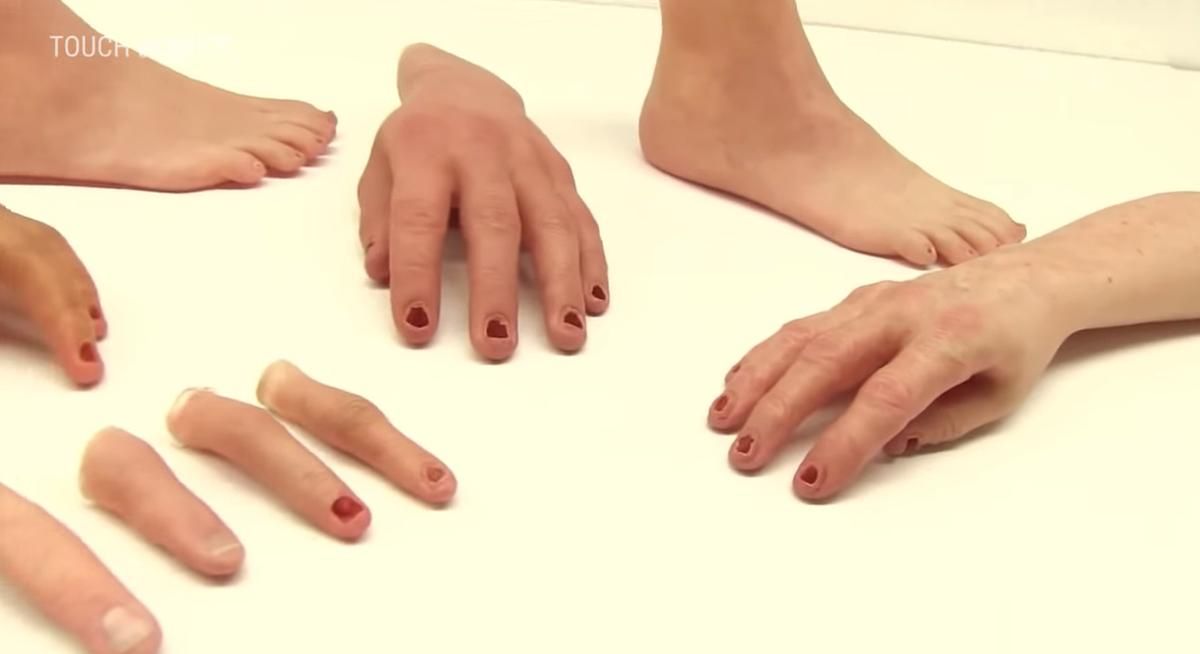
Prosthesis can be covered or left uncovered depending on your choice. If covered, a foam type material will be used to create shape to match the remaining side as close as possible. Over the foam shape will be another layer. This can be as simple as a nylon or vinyl stocking, or an 'off the shelf skin like cover, or an individually made high definition cover showing freckles, veins and hair. These cosmetic covers are more life like but rarely look exactly the same as your own limb. It is worth noting that covers add weight to your prosthesis and will not change in different situations like you own skin, such as tanning.
Subcategory listing


Our catalog
View our catalog online. 83 product pages for:
- Orthopedics
- Mobility aids
- Splints
- Prosthesis
- Scoliosis
Download it in PDF format